

December 5, 2025
nethulilesha@gmail.com
Tipping, Cash, and Cards: Simple Money Guide
Tipping, Cash, and Cards: Simple Money Guide
A short, practical guide to paying in Sri Lanka—what works best, when to tip, how much to carry and how to avoid avoidable fees. Keep it simple, carry small notes and pay in LKR.
Money
Tipping
ATMs
Cards
Practical
Quick answer
- Use cash (LKR) for small spends and tips. Cards for hotels, malls and many restaurants.
- ATMs in towns work with most Visa/Mastercard debit/credit cards. Withdraw a sensible amount and keep small notes.
- Tips are appreciated but optional. Round up in casual places; use simple ranges for guides and drivers.
- Always pay in LKR if a terminal offers foreign currency conversion.
Cash basics
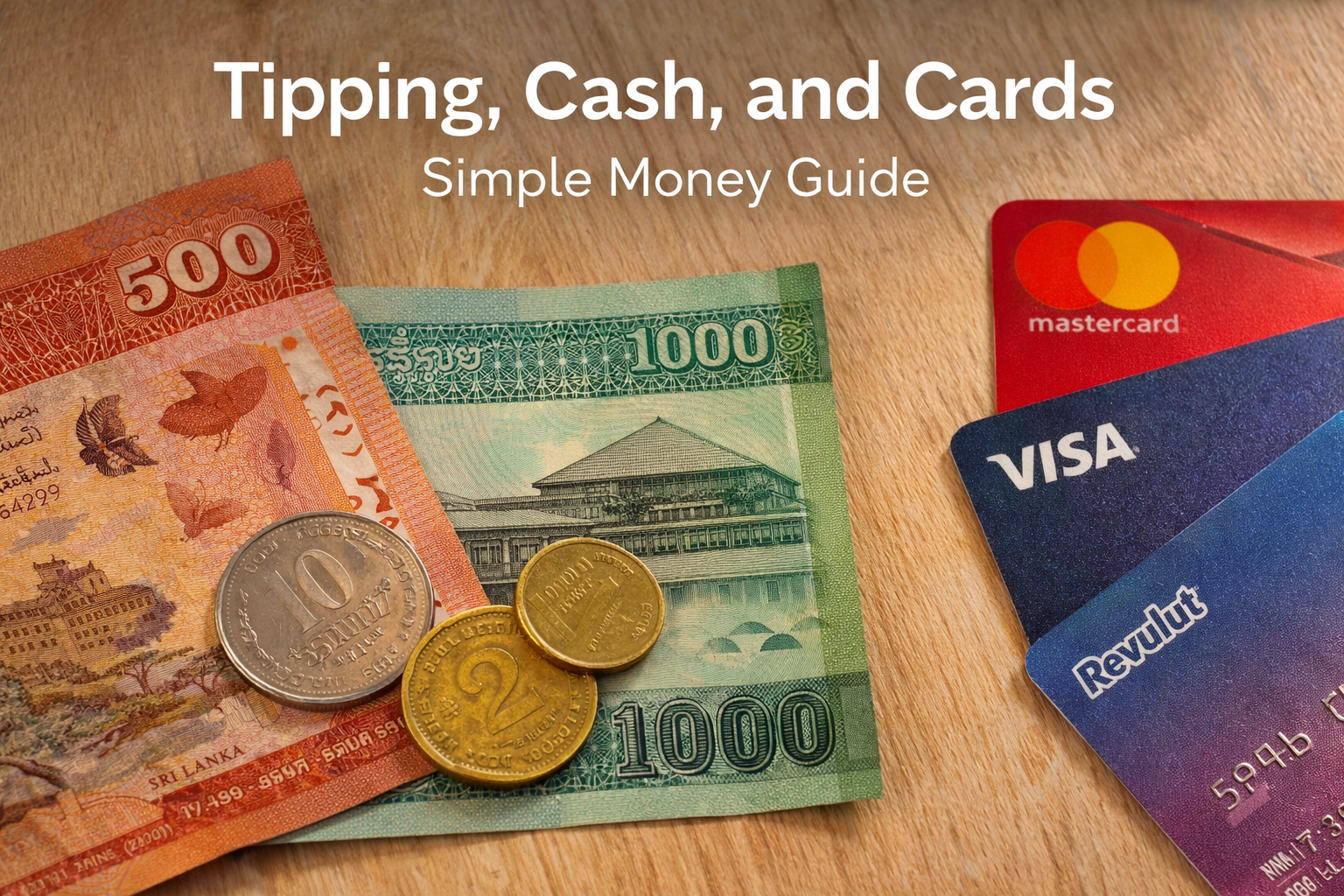
- Local currency is the Sri Lankan Rupee (LKR). Carry a mix of 100, 200, 500 and 1000 notes for day-to-day spends.
- Exchange at banks or authorised counters. Avoid street changers. Keep receipts for any exchange.
- Some small vendors and national park kiosks are cash only. Markets, tuk-tuks and rural cafés too.
Cards and contactless
- Hotels, supermarkets and many city restaurants accept cards (often contactless). Smaller places may not.
- If a machine offers to charge you in your home currency (DCC), decline and choose LKR to avoid extra markups.
- Ask about any card surcharge before paying (some merchants add one).
- Carry two cards from different networks where possible. Keep one separate as backup.
ATMs and withdrawals
- Use ATMs at major-bank branches in towns. Fees and limits vary by bank and your card issuer.
- Withdraw during the day and put larger notes straight into the hotel safe. Keep small notes handy for tips and roadside buys.
- If an ATM prompts “conversion” to your home currency, choose without conversion to let your bank set the rate.
Tipping guide (simple ranges)
These are friendly guidelines, not rules. Adjust for group size and service level.
Food & drink
- Cafés & casual eateries: Round up to the nearest 100 LKR.
- Restaurants (no service charge): 5–10% of the bill.
- Restaurants (service charge added): Extra tip optional—round up if service was great.
- Bars: Round up small change or 100–200 LKR per round.
Hotels & spas
- Porters: 200–500 LKR per bag (min 300 for heavy/long carries).
- Housekeeping: 500–1000 LKR per stay (or per night if extended).
- Spa therapists: 10–15% if no service charge; otherwise 500–1000 LKR as a thank-you.
- Concierge special help: 500–1000 LKR.
Transport & guiding
- Tuk-tuks: Round up to the nearest 100 LKR (agree fare first if no meter).
- Driver-guide (full day): 1500–3000 LKR per day per couple/family.
- Dedicated site guide: 1000–2000 LKR for 1–2 hours (more for specialist tours).
- Safari jeep driver/tracker: 1500–2500 LKR per drive (shared between crew).
- Boat crews/whale trips: 1000–2000 LKR total to a shared tip box.
Experiences
- Cycling/trek leaders: 1500–3000 LKR per half/full day.
- Village lunches/hosts: 300–500 LKR for a small group if a tip jar is present.
- Temple donations: Optional—use the box near the entrance and dress modestly.
When not to tip
- At very simple eateries where the owner serves you, rounding up is enough.
- For poor or unsafe service—feedback is more useful than a tip.
- In government offices and ticket counters—no tips.
Handy cash plan
- Carry a day pouch with 100/200/500 notes for tips, tuk-tuks and small buys.
- Keep 1000 notes for restaurants and admission fees.
- Store larger notes and passports in the hotel safe; carry only what you need for the half-day.
Do & don’t
- Do ask if tax/service are already included before adding a tip.
- Do pay in LKR, not foreign cash, for fair rates and easier change.
- Don’t accept damaged notes as change; politely ask for another note.
- Don’t flash large wads of cash in busy markets.